AQA A Level Chemistry: What to Revise First in January (A Simple Topic-Order Plan + Quick Quizzes)
January revision for AQA A Level Chemistry can feel daunting—especially right after the winter break. You might be staring at a massive folder of notes, confused about where to start and what matters most for the exams. At Brain Glue, we know the jump back into chemistry revision needs clarity, confidence, and a clear topic order. Here’s our practical, subject-specific guide for what to revise first in January, how to sequence topics efficiently, and ways to reinforce learning through rapid-fire quizzes and feedback.
Why January is Pivotal for A Level Chemistry Revision
Many students underestimate how important January is. Teachers often move quickly through new specification content, while exam boards expect you to have strong recall of year 12 fundamentals. If you tackle revision systematically now, you’ll avoid panic closer to exam season and lock core knowledge into your long-term memory.
AQA A Level Chemistry: The Smart Topic-Order Plan
Instead of picking random chapters, January is the time to focus on the foundational areas that are:
- Heavily examined year after year
- Essential for understanding year 13 material
- Easy to forget if not revisited regularly
Let’s break it down by paper and topic—so you know exactly what to tackle first.
1. Physical Chemistry Fundamentals (Start Here)
Physical chemistry is the backbone of AQA A Level Chemistry. Exam papers rely on you being sharp with calculations, equations, and processes from year 12. Start here so later organic and inorganic topics make more sense.
- Atomic Structure: Electron configuration, ionisation energy trends, isotopes.
- Amount of Substance: Moles, equations, empirical vs. molecular formula, titration calculations.
- Bonding: Ionic, covalent, metallic bonding and key properties.
- Energetics: Exothermic vs. endothermic reactions, Hess’s Law, enthalpy cycles.
- Equilibria: Le Chatelier, calculating Kc and predictions for exam-style scenarios.
- Redox: Oxidation numbers, balancing half equations, practical electrochemistry basics.
Focus on one or two subtopics per study session. Write your own equations, do short calculations, and test yourself immediately after each revision burst.
2. Organic Chemistry: Year 12 Core and First Year 13 Additions
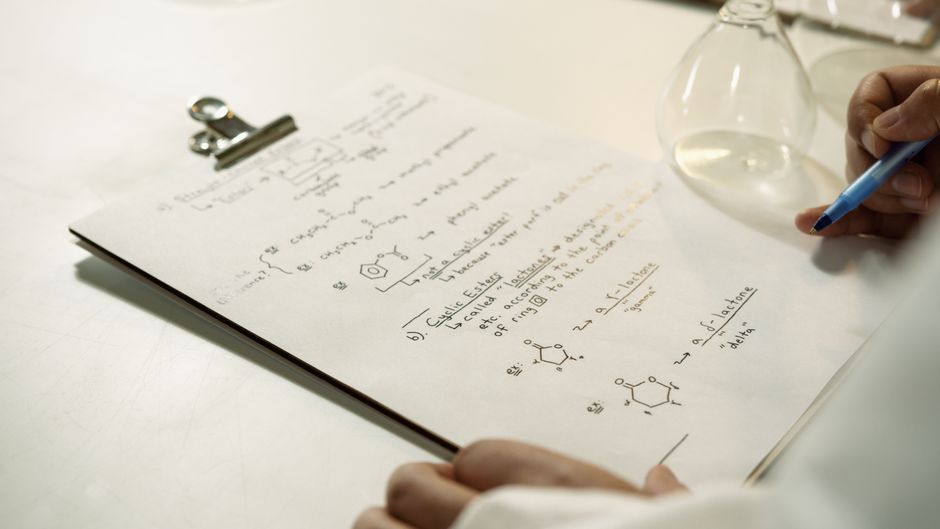
Dive into organic chemistry with a spiral approach: revisit the basics before adding new detail. Most mistakes in year 13 topics like aromatic chemistry or amino acids are due to weak fundamentals from year 12. We recommend this sequence:
- Basic Concepts and Hydrocarbons: Nomenclature, isomerism, alkanes, alkenes, mechanisms like electrophilic addition.
- Haloalkanes and Alcohols: Reactions, nucleophilic substitution/elimination basics, oxidation of alcohols.
- Intro to Year 13 Organics: Aldehydes, ketones, carboxylic acids (including mechanisms and reaction schemes).
For each functional group, draw reaction flowcharts on scrap paper. Try to explain every reaction’s mechanism out loud or to a peer—you’ll spot the gaps instantly.
3. Inorganic Chemistry: Linking Periodicity and Group Chemistry
The AQA exam board loves questions linking periodic trends to group properties (and to practical experiments). Get confident with:
- Periodicity: Trends in atomic radius, ionisation energy, melting points, reactions of Period 3 oxides.
- Group 2 and Group 7: Reactivity, solubility, redox trends, qualitative tests (e.g., test for halides, flame tests for Group 2).
Spend 1-2 sessions per group, always revisiting why the trends occur, not just memorising them.
4. Methods and Practicals: The Overlooked Quick Win
Practicals and data analysis are frequently tested and often ignored in early revision efforts. Make January the month you:
- Review required practicals and the rationale behind each method
- Memorise key definitions (accuracy, precision, random/systematic errors)
- Practise planning investigations or interpreting data sets
Keep a flashcard deck with concise practical methods, and quiz yourself in spare moments.
Your January Revision Week: Structure for Consistency
Here’s a sample week designed by us at Brain Glue for maximum topic coverage and efficient recall:
- Monday: Atomic structure, periodicity, and quick quiz
- Tuesday: Moles, calculations, and bonding (plus quiz practice)
- Wednesday: Energetics, equilibria, redox (include short worksheet/practical recap)
- Thursday: Organic basics, alkanes, alkenes, short answer quiz
- Friday: Haloalkanes, alcohols, reaction mechanism recall
- Saturday: Inorganic—Group 2, Group 7, test for ions
- Sunday: Required practicals review, rest, and catch-up on tough areas based on your quiz feedback
Rotate topics weekly, always mixing quick recall quizzes with more in-depth practice questions or written explanations. For more study plan tips, see our A Level exam-style practice blog.
Quick Quizzes: Why You Need Instant Feedback, Not Just Notes
Reading or rewriting notes only gives you the illusion of knowing chemistry. Low-stakes quizzing—especially questions that mix topics and force you to recall, not recognise—makes knowledge stick. Here’s why we build instant quizzes into Brain Glue:
- Forces you to retrieve information from memory, which strengthens neural pathways
- Exposes your weak spots before the exams, allowing you to fix them immediately
- Keeps revision low-pressure but high-frequency, critical for long-term retention
- Lets you practise multi-step calculations, definitions, and mechanisms in realistic timed bursts

Example: Mixed-Topic Quiz Questions for January
- Calculate the number of moles in 12 g of carbon-12
- Draw and explain the mechanism for the reaction of bromine with ethene
- Explain why the first ionisation energy of magnesium is greater than sodium
- Write half equations for the reaction of chlorine with cold, dilute sodium hydroxide
As you answer, jot down any uncertainty—this is your signal for what to revise next. Even if you miss questions, instant feedback will show you if your error is memory, logic, or a misconception.
How Brain Glue Makes January Chemistry Revision Smarter
At Brain Glue, our approach is to use AI-powered, spaced repetition quizzes that adapt to your mistakes and strengths. Our system quickly learns which AQA Chemistry topics you regularly forget (like a recurring mole calculation mistake or a stubborn mechanism confusion) and nudges you to revisit them before they slip away.
Why does this matter? Because research shows that interleaving different types of questions and spacing out practice—rather than cramming on one topic or reading without testing—gives far better results for A Level Chemistry. In fact, we wrote about why interleaved practice trumps old-school blocked practice here.
You can access daily quizzes targeting AQA Chemistry specification points, get instant written feedback, and see exactly which topic to practise next time. This takes the uncertainty and guesswork out of your January study—and sets you up for top grades come May and June.
Final Tips: Avoiding Common Pitfalls
- Don’t skip the year 12 physical chemistry or practicals—over half the questions rely on these skills
- Mix up multiple choice, calculation, and written questions every session
- Act on feedback from quizzes/friends/teachers swiftly—don’t let misconceptions fester
- Balance your schedule: a little, often, is always better than one massive cram
If you’re finding revision stressful or repetitive, check out our advice for reducing burnout and staying motivated.
Conclusion: Your January Launchpad for Chemistry Success
Set the tone for the rest of the academic year by prioritising physical chemistry and organic basics first, then layering on new content with quizzes and reflection. Make your revision active—not passive. Keep your quizzes low-stakes, your mistakes welcome, and your feedback instant. That’s not just smart, it’s the Brain Glue way.
If you want to experience AI-powered adaptive quizzing geared for AQA A Level Chemistry (plus all your other subjects), discover the Brain Glue app on iOS or Android, or explore more proven strategies at www.brainglue.app.