How to Revise for A Level Chemistry OCR: Evidence-Based Strategies and Resources

Revising for A Level Chemistry with OCR as your exam board is genuinely challenging but immensely rewarding. Chemistry is demanding: the concepts are sometimes abstract, the calculations exacting, and the volume of content significant. Over the years, we’ve helped thousands of students turn confusion into confidence with the right blend of strategies, resources, and mindset. In this blog, we’ll lay out a detailed, evidence-based roadmap for tackling OCR A Level Chemistry revision, grounded in cognitive science and our own day-to-day work empowering ambitious students and teachers.
1. Know the OCR Specification Inside Out
Before even thinking about when or how to revise, you need to be clear on what you’re revising. The OCR A Level Chemistry specification is your revision map.
- Download the most recent specification directly from the OCR website. It clearly lists all the learning outcomes and topics—these are what the exam questions will be based on.
- Print or save a checklist version and routinely tick off what you’ve covered.
- Pay attention to assessment objectives (AOs): Some questions are primarily about recall (AO1), others require application (AO2), or evaluation/synthesis (AO3). This changes how you approach revision for each area.
2. Use Active Recall, Not Passive Reading
Simply re-reading notes or highlighting will give you a false sense of progress without improving exam performance. Evidence from cognitive psychology is clear: active recall—forcing your brain to retrieve information—results in much greater retention and understanding than passive review.
- Quiz yourself regularly: After studying a topic, close your notes and jot down everything you can remember on a blank page.
- Use flashcards (digital or paper): Write concise question-answer pairs and shuffle them frequently, always testing yourself both ways.
- Explain answers out loud (the Feynman Technique): Pretend you’re teaching someone else and break down complex concepts into simple steps—this exposes any gaps fast.
- Use quick, low-stakes quizzes after every revision session to check understanding. Apps like Brain Glue automatically generate these, tailored exactly to OCR Chemistry and your past performance.
3. Harness Spaced and Interleaved Practice
To lock in knowledge for the long-term, spacing out revision sessions is crucial—cramming might work for a single test, but it’s unreliable for A Levels. Even better: mix up topics within each session (interleaving), which prevents your brain from going on autopilot.
- Create a simple revision timetable that revisits topics at gradually increasing intervals (e.g., one day later, then a week later, then a month).
- Interleave different types of content: For example, follow organic mechanisms with some physical chemistry calculations, then some inorganic definitions.
- Intentionally switching between topics makes exams feel less daunting, since OCR’s papers often do this by design.
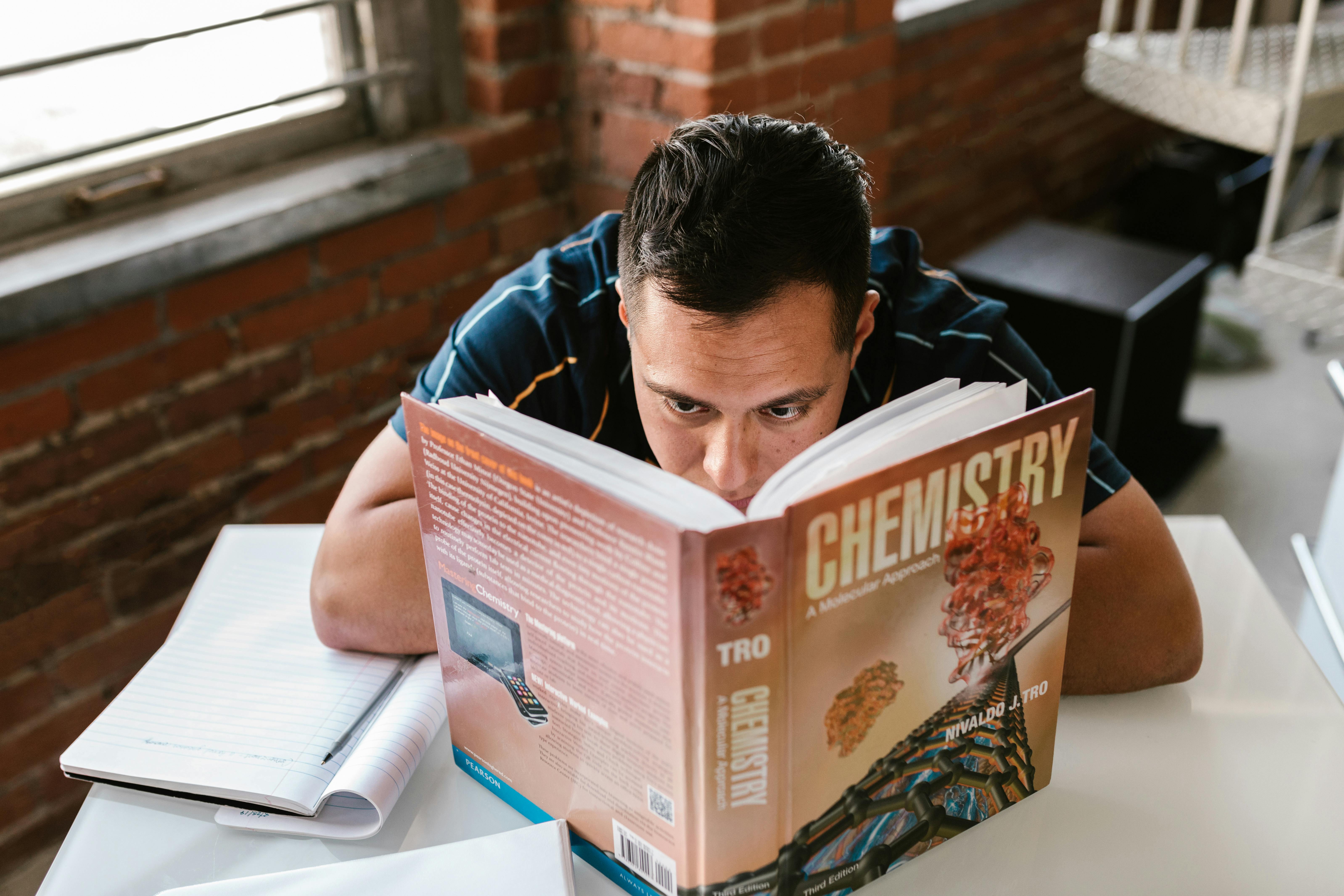
We discuss these concepts in greater detail in this guide contrasting interleaved and blocked practice for A Level success.
4. Practise Exam Skills — Not Just Content
OCR Chemistry exams are as much about how you answer as what you know. Regularly practising past paper questions under timed conditions can reveal whether your understanding translates to marks.
- Download past papers and mark schemes from OCR’s website. Work through them topic by topic first, then start attempting full papers closer to exams.
- Mark your own answers strictly: Compare your responses word for word with the mark scheme. This helps you internalise examiner expectations, particularly for those notorious “explain” or “suggest” questions.
- Use examiner reports to identify common pitfalls and misunderstandings from past years. These are available for free and are a goldmine of insight.
- If you struggle with timing, set yourself 5-minute challenges: How many 2- or 3-mark questions can you answer accurately?
If you need a strategy for using these effectively, we break it down in our past paper revision tips blog.
5. Write and Review Model Answers
For longer questions, especially those above 4 marks, practice writing concise, point-by-point answers. Then, re-read the mark scheme and compare:
- Did your answer use the same scientific vocabulary?
- Did you structure it logically?
- Is every markable point clearly stated?
If possible, swap answers with friends (or your teacher) and mark each other’s work. Alternatively, digital revision tools that offer instant written feedback—like Brain Glue—can help you identify exactly what you’re missing and recommend what to focus on next.

6. Master the Maths and Data Skills
OCR Chemistry papers dedicate a significant proportion of marks to maths skills: pH calculations, mole ratios, titration equations, and graphical analysis are all fair game.
- Make a separate maths-in-chemistry cheat sheet. List formulas, units, and common calculation steps for reference.
- Practise calculator use, conversions (cm³ to dm³, mol to g, etc.), and significant figures.
- Look for questions that combine description with calculation: These often catch students out (e.g., “Explain the trend in ionisation energy, with reference to atomic radii and shielding” followed by a calculation).
7. Tackle Practical Skills — Even Without the Lab
The OCR A Level Chemistry course includes a strong focus on practical skills and data interpretation. Even if you’re out of lessons, you can refine these with specific practice:
- Use practical handbooks: OCR provides guidance on required practicals. Work through the rationale, procedures, and variables for each.
- For each experiment, be able to: (a) describe the method step-by-step, (b) evaluate sources of error, and (c) suggest improvements.
- Practise analysing sample data (tables, graphs, titration curves). Questions often require interpreting experimental outcomes or explaining anomalous results.
8. Create Condensed Summaries and Diagrams
Complex topics—like reaction mechanisms, periodicity, or equilibria—stick better when they’re visually summarised. Try these strategies:
- Draw flowcharts for organic synthesis routes or multi-step reactions.
- Create mind maps that link concepts across topics (for example, how oxidation reduces bonds, or where Le Chatelier’s Principle applies).
- Use colour-coding and icons to help mnemonics stand out.
- Review these summaries regularly, especially as part of your spaced revision schedule.
9. Use Quality Revision Resources — Focused, not Overwhelming
There are hundreds of revision tools out there, but more isn’t always better. The key is to use a few well-chosen resources aligned to the OCR specification:
- Official OCR textbooks and revision guides: These are targeted directly at your syllabus.
- Free notes sites and YouTube educators: As long as they are OCR-focused and up to date, these can be incredibly helpful for clarifying tricky topics or weird mark scheme requirements.
- Past papers and mark schemes: Absolutely essential—see earlier section for a full strategy.
- Digital revision tools: This is where apps like Brain Glue shine, as they generate specification-matched quizzes to your weakest areas, provide instant written feedback, and use spaced repetition science to lock facts, equations, and concepts into your long-term memory.

10. Look After Your Mind and Body
We’ve seen it all: students burning out from endless all-nighters, or cramming in the hope that panic will fuel performance. Instead, consider these science-backed well-being strategies:
- Prioritise sleep: Memory consolidation happens during sleep, and exam performance drops sharply when sleep-deprived.
- Energise with breaks: Use the Pomodoro Technique—work for 25 minutes, then take a 5-minute break, repeating the cycle. This keeps your brain fresh and focused.
- Stay hydrated and get some daily movement.
You can see how these habits fit into a broader revision strategy in our post on revision routines.
11. Key Takeaways: Our A Level Chemistry OCR Revision Checklist
- Master the OCR specification and assessment objectives
- Build your revision around active recall, not passive review
- Space out and interleave your practice sessions
- Focus on exam technique, maths skills, and practicals—not just textbook knowledge
- Simplify complex topics with visual diagrams and cheat sheets
- Stick to a few high-quality, specification-matched resources rather than overwhelming yourself
- Use digital apps for personalised, feedback-driven learning
- Don’t neglect sleep, rest, and well-being—they’re crucial for memory and focus
Further Reading and Resources
If you want to explore some of these strategies in more detail, here are a few of our most relevant posts:
- How to Use Low-Stakes Quizzing for Effective A Level and GCSE Revision
- Interleaved Practice vs Blocked Practice: Which Revision Strategy Is Best for GCSE and A Level Success?
- 5 Expert Tips for Using Past Papers Effectively in GCSE and A Level Revision
- How to Use AI-Generated Written Feedback to Improve Your A Level Science Answers
Final Thoughts: Trust in the Process
Above all, revising for A Level Chemistry is a marathon, not a sprint. Keep faith in the evidence-based process: regular, high-quality active recall, intelligent spacing, incremental review of past papers, and a healthy, rested brain. If you’re looking for an edge—something to make spaced, low-stakes quizzing intuitive and tailored to your exact OCR exam board needs—why not try Brain Glue? We’re here to help you lock chemistry into your long-term memory, one quiz at a time.